





How To Improve Bread Consistency With Fermentation Towers?
Maintaining consistent bread quality across large production batches requires more than accurate ingredient measurement and stable baking temperatures. Fermentation conditions also have a direct influence on dough volume, internal structure, surface appearance, and final product weight. When temperature, humidity, or fermentation time varies between batches, manufacturers may experience uneven dough expansion, inconsistent loaf sizes, and differences in finished texture.
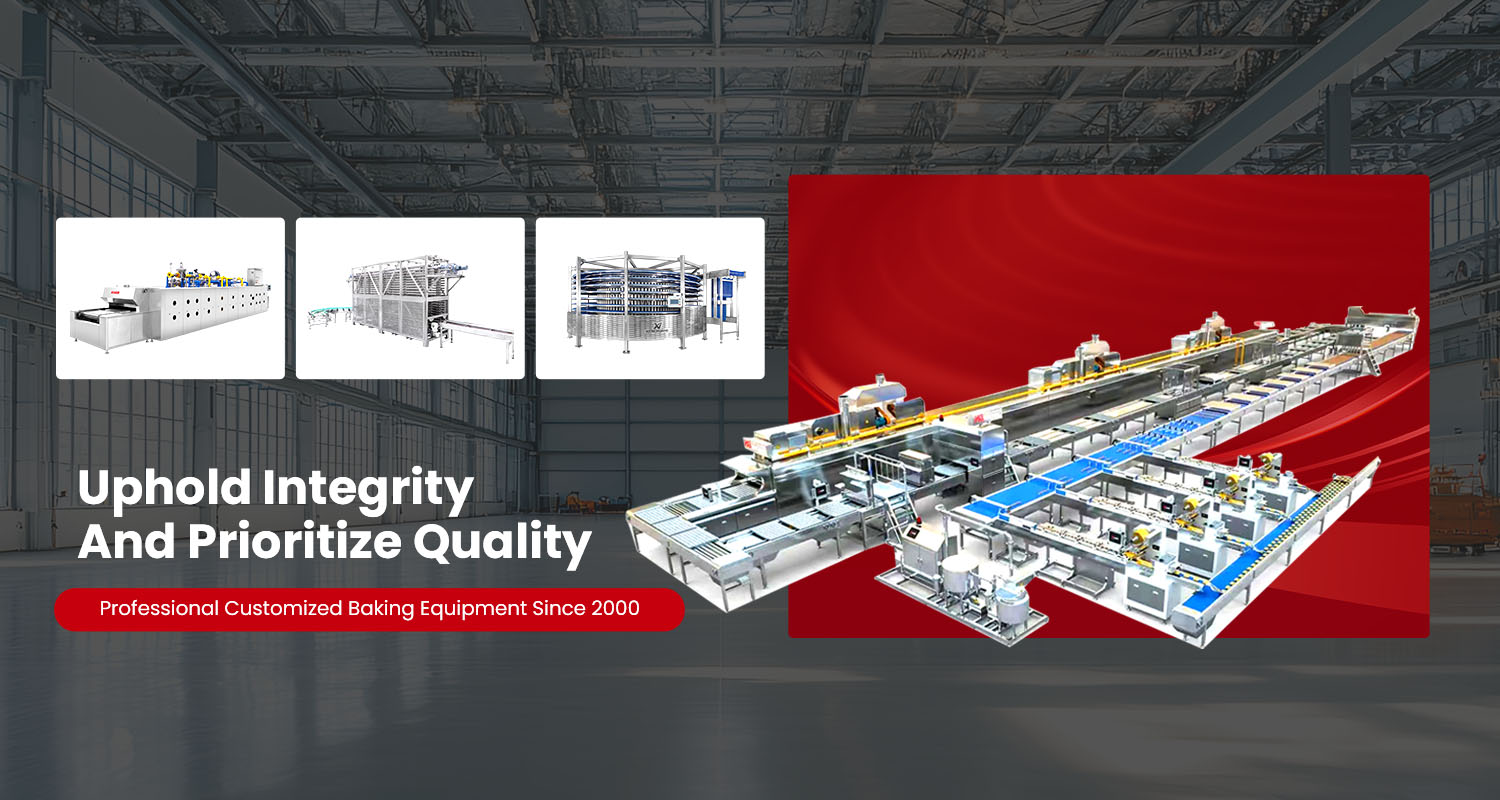
Fermentation Tower Equipment helps industrial bakeries control this critical production stage through continuous conveying and a regulated fermentation environment. By coordinating conveyor speed, temperature, humidity, and product loading, manufacturers can create more repeatable fermentation conditions. However, achieving consistent results also requires proper equipment configuration and coordination with upstream dough preparation processes.
1. Maintain Stable Temperature and Humidity
Temperature influences yeast activity and fermentation speed, while humidity helps prevent dough surfaces from drying.
For many conventional bread products, the following ranges provide useful starting points:
Temperature: approximately 28–38°C.
Relative humidity: approximately 75–85%.
These are general reference ranges rather than universal settings. Different dough formulas, yeast concentrations, and product sizes may require adjustments.
A fermentation tower should distribute heat and moisture evenly across its conveying levels. Temperature sensors should be positioned to identify variations rather than relying exclusively on one central measurement.
2. Control Conveyor Speed and Fermentation Time
Conveyor speed determines how long dough remains inside the fermentation tower. If the belt moves too quickly, dough may not reach the required expansion. Excessive residence time can cause overproofing and weaken dough structure.
A basic calculation is:
Fermentation Time = Effective Conveyor Length / Conveyor Speed
For example, a 120-meter conveying path operating at 3 meters per minute provides a theoretical residence time of 40 minutes.
Manufacturers should adjust conveyor speed according to dough development and verify the results through actual production testing.
3. Keep Product Spacing Consistent
Uneven loading can create differences in fermentation conditions. Dough pieces placed too closely together may experience restricted airflow, while inconsistent spacing can make product handling and downstream transfer less stable.
Consider these operating practices:
Maintain consistent dough piece spacing.
Use stable feeding mechanisms to prevent product accumulation.
Avoid excessive loading on individual conveyor levels.
Ensure products remain properly positioned during transportation.
Synchronize the feeding speed with upstream dividing equipment.
4. Identify Common Causes of Inconsistent Bread Quality
| Problem | Possible Cause | Recommended Adjustment |
|---|---|---|
| Uneven dough expansion | Temperature variation | Check airflow distribution |
| Dry dough surface | Insufficient humidity | Adjust moisture control |
| Oversized products | Excessive fermentation | Review residence time |
| Different loaf volumes | Inconsistent dough weight | Check dividing accuracy |
| Uneven fermentation | Irregular loading | Improve product spacing |
These problems may originate before dough enters the fermentation tower. Ingredient ratios, mixing temperature, dough handling, and dividing accuracy should also be checked.
5. Coordinate Fermentation With the Complete Production Line
A fermentation tower cannot independently guarantee finished bread consistency. Its operating conditions must match the characteristics of the dough supplied by upstream equipment and the requirements of downstream baking machines.
Manufacturers should establish clear production parameters covering dough weight, temperature after mixing, fermentation time, and required expansion.
KC-SMART considers conveying stability and environmental control when planning industrial bakery equipment configurations.
Conclusion
Improving bread consistency requires stable fermentation conditions, accurate conveyor speed, uniform product spacing, and coordinated upstream processing. Properly configured Fermentation Tower Equipment helps manufacturers reduce variations in dough development and maintain more predictable production results. Regular temperature checks and actual product testing remain essential for long-term quality control.