





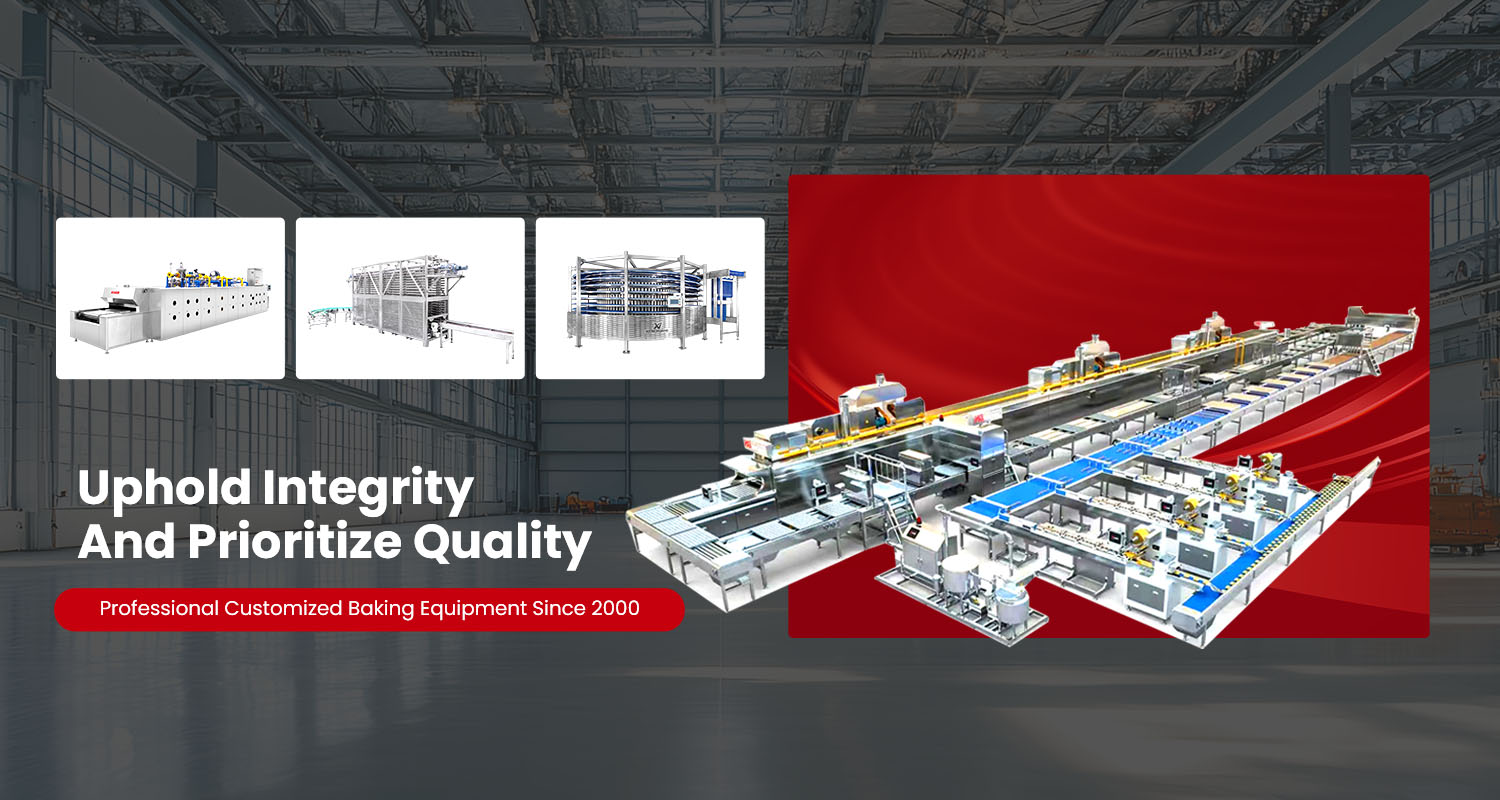
Cooling Tunnel Conveyor
A cooling tunnel conveyor is a food processing system that transports products through an enclosed cooling chamber while reducing their temperature through controlled airflow. It is commonly used after baking, cooking, coating, or other heat-related processes to prepare products for further handling, decoration, or packaging.
Unlike ordinary conveyor belts that simply move products from one location to another, a cooling tunnel conveyor combines transportation with temperature reduction. Its conveyor speed, cooling capacity, airflow, and chamber design all influence how evenly products cool before reaching the next production stage.
What Is a Cooling Tunnel Conveyor?
A cooling tunnel conveyor is an enclosed mechanical system consisting of a moving conveyor and a temperature-controlled cooling chamber. Products enter one end, travel through the tunnel, and gradually lose heat before exiting at the other end.
The system is widely used in food manufacturing, particularly for products that must cool before they can be handled or packaged.
For example, freshly baked biscuits need to reach a suitable temperature before chocolate coating or packaging. Chocolate products may require controlled cooling to allow the coating to solidify and maintain its shape.
Cooling tunnels can be designed for different product sizes, temperatures, and processing requirements.
How Does a Cooling Tunnel Conveyor Work?
The cooling process generally involves three stages.
1. Product Loading and Transportation
Hot or warm products are placed onto a conveyor belt at the entrance of the cooling tunnel. Depending on the application, the conveyor may use a flat belt, mesh belt, or another suitable conveying surface.
The belt moves products through the chamber at a controlled speed, ensuring that each item receives sufficient cooling time.
2. Controlled Air Cooling
As products travel through the tunnel, cooling air circulates around them. Fans, air ducts, and cooling units help distribute air throughout the chamber.
Heat transfers from the products to the surrounding air, gradually reducing their temperature.
Some systems use refrigerated air to achieve lower temperatures, while others rely on controlled ambient air circulation for less demanding applications.
3. Product Discharge
After passing through the cooling section, products exit the tunnel at a lower temperature.
They can then move to subsequent operations such as chocolate coating, decoration, inspection, slicing, or packaging.
The required cooling time depends on the product's initial temperature, size, composition, and target temperature.
What Are the Main Components of a Cooling Tunnel Conveyor?
A cooling tunnel consists of several components that work together to provide stable transportation and cooling.
Conveyor Belt: Carries products through the cooling chamber. Belt materials and structures should be suitable for the product type and operating environment.
Cooling Chamber: An enclosed structure that creates a controlled environment and helps reduce unwanted heat exchange with the surrounding area.
Cooling Unit: Generates or supplies cooled air to lower product temperature. Depending on the design, it may use a refrigeration system or another cooling arrangement.
Circulation Fans: Move air through the chamber to improve temperature distribution around the products.
Air Ducts: Direct airflow toward different sections of the conveyor and help reduce uneven cooling.
Temperature Sensors: Monitor operating conditions and provide information for temperature adjustment.
Control System: Coordinates conveyor speed, cooling settings, and other operating parameters.
What Are the Different Types of Cooling Tunnel Conveyors?
Cooling tunnels can be classified according to their cooling methods and conveyor arrangements.
Air-Cooled Tunnel Conveyors
Air-cooled systems use circulating air to remove heat from products. Fans distribute air through the chamber, allowing products to cool while moving along the conveyor.
They are commonly used for baked goods, biscuits, bread, and other products that require gradual temperature reduction.
Refrigerated Cooling Tunnel Conveyors
Refrigerated systems use cooling equipment to supply lower-temperature air into the tunnel.
They are suitable for products that require more controlled cooling conditions, such as chocolate-coated confectionery and certain desserts.
Mesh Belt Cooling Conveyors
Mesh belt systems use perforated or open conveyor surfaces that allow air to reach products from multiple directions.
This arrangement can improve airflow around the products and is particularly useful when the underside also needs to cool effectively.
Multi-Layer Cooling Tunnel Conveyors
Multi-layer systems use several conveyor levels to provide a longer cooling path within a relatively compact installation area.
Products travel between different levels before reaching the discharge section. The arrangement helps increase cooling time without requiring an equally long single-level conveyor.
What Products Can Be Processed by a Cooling Tunnel Conveyor?
Cooling tunnel conveyors are used in many food processing applications.
| Product Type | Main Cooling Purpose |
|---|---|
| Bread | Reduce temperature before slicing and packaging |
| Biscuits | Stabilize texture before further handling |
| Chocolate | Allow coatings to solidify |
| Cakes | Prepare products for decoration and packaging |
| Cookies | Maintain shape and prevent packaging condensation |
| Candy | Support controlled setting and solidification |
| Pastries | Reduce heat before filling or packaging |
| Coated Snacks | Allow surface coatings to become stable |
Different products require different cooling conditions. Chocolate, for example, is sensitive to temperature changes because its texture and surface appearance depend on controlled crystallization.
What Are the Advantages of Using a Cooling Tunnel Conveyor?
Continuous Product Movement: Products move through the cooling chamber without repeated manual transportation, supporting a more organized processing flow.
Controlled Cooling Conditions: Adjustable airflow and temperature settings help maintain suitable conditions for different products.
Improved Product Handling: Cooling before further processing helps reduce the risk of deformation, sticking, and surface damage.
Consistent Product Temperature: Properly designed airflow helps reduce temperature differences between products moving through the same cooling section.
Space Utilization: Multi-layer configurations provide extended cooling paths while making efficient use of available floor space.
Cooling Tunnel Conveyor vs. Conventional Cooling Conveyor: What Is the Difference?
Both systems transport products while they cool, but their structures and operating conditions can be different.
| Comparison | Cooling Tunnel Conveyor | Conventional Cooling Conveyor |
|---|---|---|
| Structure | Enclosed chamber | Usually open conveyor |
| Airflow | Controlled circulation | Mainly surrounding air |
| Temperature control | May include refrigeration | Often relies on ambient conditions |
| Cooling environment | More controlled | More exposed to surroundings |
| Applications | Controlled food cooling | General product cooling |
A conventional conveyor may be sufficient when products only need to lose a small amount of heat. A cooling tunnel is more suitable when cooling conditions, airflow, or temperature consistency need closer control.
How to Choose a Suitable Cooling Tunnel Conveyor?
Identify Product Characteristics
Consider product size, shape, weight, moisture content, and initial temperature. These factors influence the amount of heat that must be removed.
Determine the Required Cooling Temperature
Different products have different cooling requirements. Baked goods may only need to reach a suitable handling temperature, while chocolate products may require more carefully controlled conditions.
Evaluate Cooling Capacity
The cooling system should provide sufficient capacity for the amount of heat generated by incoming products. Product quantity, incoming temperature, and desired discharge temperature all influence this requirement.
Check Conveyor Speed and Length
Cooling time is determined partly by the distance products travel and the speed of the conveyor. A longer cooling path or slower belt speed generally provides more time for heat removal.
Consider Airflow Distribution
Air should circulate evenly throughout the cooling chamber. Poor airflow may cause products in different positions to cool at different rates.
Review Cleaning and Maintenance Requirements
Food particles, crumbs, and product residues can accumulate on conveyor surfaces and inside the cooling chamber. Accessible components make routine cleaning and inspection easier.
What Are Common Problems with Cooling Tunnel Conveyors?
Uneven Cooling: Inconsistent airflow, blocked ducts, or incorrect fan operation may create temperature differences across the conveyor.
Insufficient Cooling: Excessive conveyor speed, inadequate cooling capacity, or high incoming product temperatures may prevent products from reaching the required discharge temperature.
Conveyor Belt Deviation: Incorrect belt tension, misaligned rollers, or mechanical wear may cause the belt to move unevenly.
Condensation: Excessive temperature differences or unsuitable humidity conditions can cause moisture to form on products or internal surfaces.
Excessive Energy Consumption: Poor insulation, unnecessary air leakage, and unsuitable operating settings may increase cooling energy requirements.
Regular inspection of fans, cooling units, sensors, conveyor components, and chamber insulation helps maintain stable operation.
Frequently Asked Questions
How Long Does Food Stay Inside a Cooling Tunnel?
Cooling time depends on tunnel length, conveyor speed, product thickness, initial temperature, and cooling capacity. Different products require different residence times.
Does a Cooling Tunnel Conveyor Use Refrigeration?
Not always. Some systems use ambient or forced-air cooling, while others use refrigeration equipment to provide lower-temperature air.
Why Is Airflow Important in a Cooling Tunnel?
Airflow transfers heat away from product surfaces and distributes cooling throughout the chamber. Uneven airflow can result in inconsistent product temperatures.
Can a Cooling Tunnel Conveyor Be Used for Chocolate?
Yes. Cooling tunnels are widely used in chocolate processing to help coatings set and stabilize. Temperature and cooling conditions should be matched to the chocolate formulation and processing stage.
Why Should Bread Cool Before Packaging?
Freshly baked bread releases heat and moisture. Packaging it too early may cause condensation, affecting crust texture and product quality.
How Often Should a Cooling Tunnel Conveyor Be Cleaned?
Cleaning frequency depends on the product, operating conditions, and food safety procedures. Conveyor belts, air ducts, and accessible internal surfaces should be cleaned according to the manufacturer's instructions.
A cooling tunnel conveyor combines controlled airflow and continuous transportation to reduce product temperature after baking or processing. Its performance depends on cooling capacity, air distribution, conveyor speed, and product characteristics. Understanding these factors helps explain why cooling tunnels are an important part of modern food production systems.
Previous: Industrial Bakery Cooling Systems