





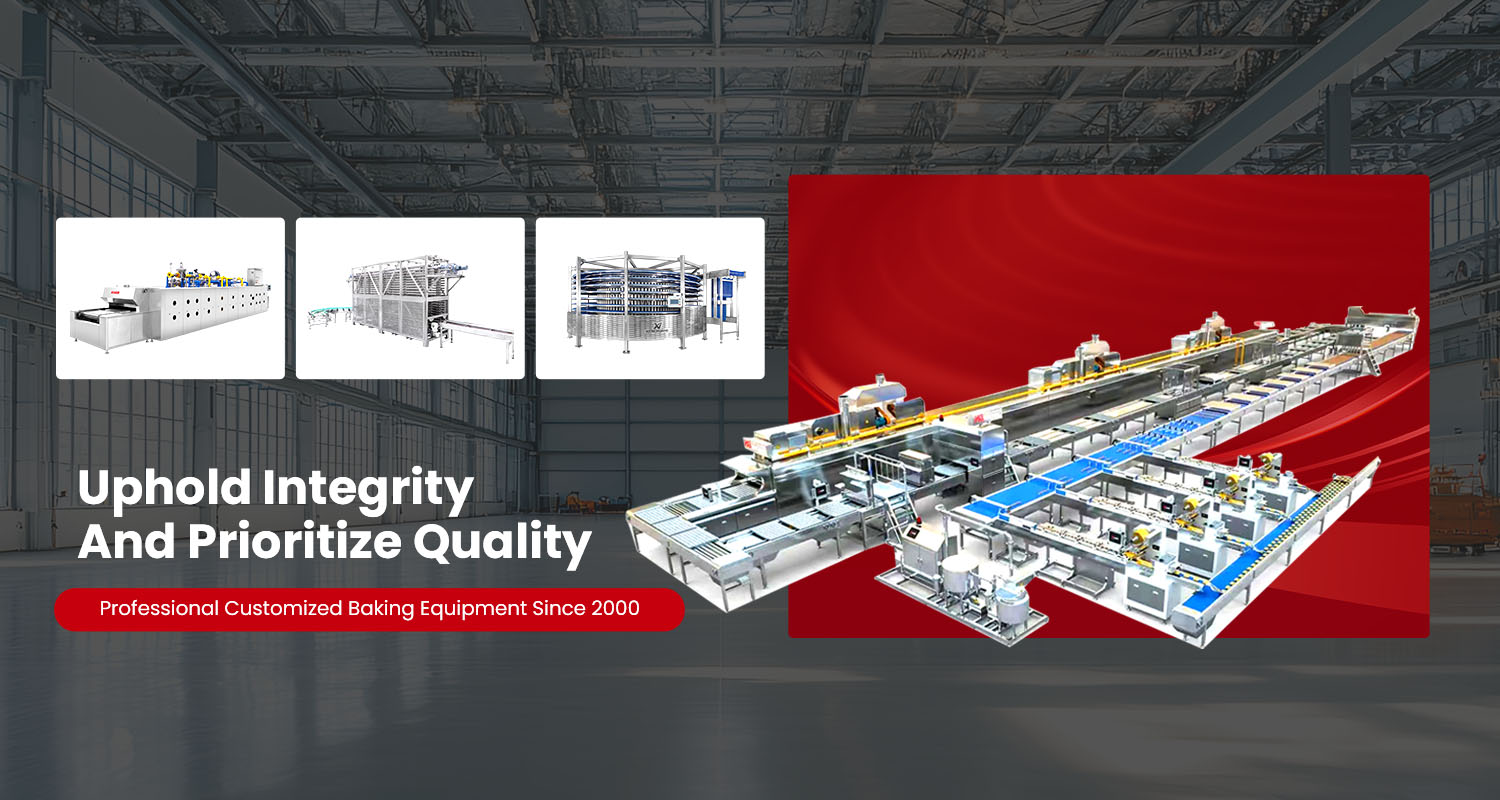
Industrial Bakery Cooling Systems
Industrial bakery cooling systems are designed to reduce the temperature of baked products after they leave the oven. They use conveyors, cooling towers, and controlled airflow to remove heat before bread, biscuits, cakes, and other baked goods move to slicing, decoration, or packaging.
Cooling is an important stage in bakery production because freshly baked products continue to release heat and moisture after leaving the oven. Without sufficient cooling time, bread may become compressed during slicing, biscuits may lose their crisp texture, and packaged products may develop unwanted condensation.
What Are Industrial Bakery Cooling Systems?
Industrial bakery cooling systems are mechanical arrangements that transport baked products while allowing heat to escape under controlled conditions.
Unlike ordinary storage or cooling areas, these systems are integrated into the production process. Products move from the oven onto cooling conveyors or through dedicated cooling structures, reducing the need for manual handling.
A typical system may include straight conveyors, Spiral Cooling Towers, multi-level conveyor structures, ventilation fans, and temperature monitoring components.
The configuration depends on the type of baked product, its size, moisture content, baking temperature, and required cooling time.
Why Is Cooling Important in Industrial Bakery Production?
Cooling affects the texture, structure, and handling characteristics of baked products.
Preventing Moisture Condensation
Freshly baked bread and pastries release heat and moisture as they cool. If products are packaged before reaching a suitable temperature, water vapour may condense inside the packaging.
This moisture can soften the crust, affect the surface appearance, and create conditions that reduce product quality.
Maintaining Product Structure
Bread continues to stabilize after baking. Allowing sufficient cooling time helps its internal structure become firmer before slicing or further handling.
For biscuits and crackers, cooling helps the finished structure become stable and crisp.
Preparing Products for Further Processing
Many bakery products require additional operations after baking. Cakes may need filling or decoration, biscuits may receive chocolate coatings, and bread may move to slicing equipment.
Cooling helps products reach a more suitable condition for these operations.
Supporting Consistent Product Quality
A controlled cooling process reduces differences in product temperature before the next production stage. This helps maintain more predictable handling and processing conditions.
What Are the Main Types of Industrial Bakery Cooling Systems?
Different cooling systems are used according to product characteristics, available space, and production requirements.
Straight Cooling Conveyors
Straight cooling conveyors transport baked products along an extended belt after they leave the oven.
Their relatively simple structure makes them suitable for products that require gradual cooling over a defined distance.
Air circulates around the products as they move along the conveyor. The belt material and design should allow appropriate airflow and support easy cleaning.
spiral cooling towers
spiral cooling towers use a vertically arranged conveyor to provide a long transportation path within a relatively small floor area.
Products enter the system and travel around a central structure through multiple levels before reaching the discharge point.
This arrangement is commonly used for bread, biscuits, and other baked products that require extended cooling time.
Multi-Level Cooling Conveyors
Multi-level cooling systems use several horizontal conveyor sections connected by transfer mechanisms.
Products move between levels, creating a longer cooling path without requiring an equally large production floor.
The number of levels and conveyor arrangement depend on the required cooling duration and available installation height.
Cooling Tunnel Systems
Cooling tunnel systems transport baked products through an enclosed chamber where airflow and temperature can be controlled.
Some systems use ambient air, while others incorporate mechanical refrigeration to achieve lower temperatures.
They are particularly useful when products require more specific cooling conditions, such as chocolate-coated biscuits or certain confectionery products.
How Does an Industrial Bakery Cooling System Work?
The cooling process begins immediately after products leave the oven.
1. Product Transfer
Freshly baked products move from the oven discharge section onto a cooling conveyor.
Transfer mechanisms must handle products carefully because some baked goods are still relatively soft and fragile when hot.
2. Heat Release
As products move along the conveyor, heat transfers from their internal structure toward the surface and then into the surrounding air.
The rate of heat removal depends on product thickness, initial temperature, surface area, and airflow conditions.
3. Air Circulation
Fans and ventilation ducts help move air around the products.
Proper air distribution reduces temperature differences between different sections of the conveyor. Excessive or uneven airflow, however, may affect delicate products or cause unwanted moisture loss.
4. Gradual Temperature Reduction
Products continue through the cooling system until they reach a suitable temperature for subsequent operations.
Cooling time is influenced by conveyor length, belt speed, product dimensions, and the surrounding temperature.
5. Discharge and Further Processing
After cooling, products can move to slicing, sorting, decoration, coating, or packaging equipment.
The required discharge temperature depends on the characteristics and intended use of each product.
What Types of Bakery Products Require Industrial Cooling Systems?
Different baked products have different cooling requirements.
| Bakery Product | Main Cooling Requirement | Common Cooling Equipment |
|---|---|---|
| Bread | Stabilizing internal structure before slicing | Spiral cooling tower |
| Biscuits | Removing residual heat and maintaining crispness | Straight or multi-level conveyor |
| Cookies | Preventing deformation and preparing for packaging | Cooling conveyor |
| Cakes | Reaching a suitable temperature for filling and decoration | Multi-level cooling system |
| Croissants | Maintaining flaky structure before handling | Spiral cooling conveyor |
| Mooncakes | Gradual cooling before inspection and packaging | Cooling conveyor |
| Crackers | Maintaining a dry and crisp texture | Multi-level cooling conveyor |
The same cooling arrangement may not be suitable for every product. For example, large bread loaves generally require more cooling time than thin biscuits because their internal heat takes longer to escape.
What Are the Key Components of an Industrial Bakery Cooling System?
A complete cooling system combines several mechanical and environmental control components.
Cooling Conveyor: Transports baked products through the cooling process. Its belt structure and speed influence product movement and cooling duration.
Spiral Tower Structure: Supports multiple conveyor levels and provides an extended transportation route within a compact footprint.
Circulation Fans: Move air around products to improve heat transfer and reduce temperature differences.
Air Ducts: Guide airflow through different sections of the cooling system.
Temperature Sensors: Monitor operating conditions and help maintain suitable cooling settings.
Drive and Transmission System: Controls conveyor movement and maintains stable product transportation.
Control System: Coordinates conveyor speed, fan operation, and other adjustable parameters.
Spiral Cooling Tower vs. Straight Cooling Conveyor: Which Is Better?
Both systems help reduce product temperature, but their layouts and applications differ.
| Comparison | Spiral Cooling Tower | Straight Cooling Conveyor |
|---|---|---|
| Structure | Vertical spiral arrangement | Horizontal conveyor |
| Cooling path | Long path over multiple levels | Extended straight path |
| Floor space | More compact | Requires more floor length |
| Installation | Requires sufficient vertical clearance | Requires sufficient horizontal space |
| Typical applications | Bread, biscuits, croissants | Biscuits, cookies, bread |
| Product movement | Continuous spiral transportation | Continuous linear transportation |
A spiral cooling tower is useful when a long cooling path is required but horizontal space is limited. A straight cooling conveyor is suitable when sufficient floor length is available and the production layout allows linear transportation.
How to Choose a Suitable Industrial Bakery Cooling System?
Consider Product Size and Characteristics
The dimensions, weight, moisture content, and structure of baked products influence how quickly they lose heat.
Large loaves generally require longer cooling periods than thin biscuits or crackers.
Determine the Required Cooling Time
Cooling time should be based on the product's initial temperature and the temperature required for the next processing stage.
The conveyor length and speed must provide sufficient residence time.
Evaluate Available Installation Space
Straight conveyors require adequate horizontal space, while spiral towers make greater use of vertical space.
The installation should also allow convenient access for cleaning, inspection, and maintenance.
Check Airflow Distribution
Air should circulate appropriately around products without creating excessive temperature differences.
The airflow arrangement should match the product's size, shape, and cooling characteristics.
Consider Production Line Coordination
The cooling system should operate in coordination with the oven and downstream equipment.
Differences in conveying speed may cause products to accumulate or create gaps between processing stages.
What Are Common Problems in Industrial Bakery Cooling Systems?
Uneven Cooling: Blocked ventilation ducts, fan problems, or poor airflow distribution may cause products to cool at different rates.
Product Deformation: Fragile baked goods may become damaged if transfer points are poorly designed or conveyor movement is unstable.
Insufficient Cooling Time: Excessive belt speed or inadequate conveyor length may prevent products from reaching the required temperature.
Excessive Moisture Loss: Uncontrolled airflow may dry products too quickly and affect their final texture.
Conveyor Misalignment: Incorrect belt tension, worn rollers, or mechanical problems may interrupt product transportation.
Regular inspection of conveyor belts, fans, air ducts, sensors, and drive components helps identify potential problems before they affect normal operation.
Frequently Asked Questions
How Long Does Bread Need to Cool After Baking?
Cooling time depends on loaf size, baking temperature, moisture content, and surrounding conditions. Large loaves generally need longer than small rolls because heat takes more time to escape from their centres.
Why Are Spiral Cooling Towers Used in Bakeries?
Spiral cooling towers provide a long conveying path through multiple vertical levels. They allow baked products to cool gradually while making efficient use of floor space.
Can Biscuits and Bread Use the Same Cooling System?
They can use similar conveyor structures, but their cooling settings and required residence times are different. Biscuits are generally thinner and cool faster, while bread requires more time for internal heat to dissipate.
Do Industrial Bakery Cooling Systems Need Refrigeration?
Not always. Many bakery products can be cooled using circulating ambient air. Refrigeration is used when lower temperatures or more controlled cooling conditions are required.
Why Should Cakes Cool Before Decoration?
Warm cakes are soft and may release moisture, making icing and cream difficult to apply evenly. Cooling helps stabilize the structure and provides a more suitable surface for decoration.
How Should a bakery cooling conveyor Be Cleaned?
Remove crumbs and food residues from accessible conveyor surfaces and surrounding structures. Cleaning frequency and procedures should follow the equipment manufacturer's instructions and applicable food hygiene requirements.
Industrial bakery cooling systems connect the baking stage with subsequent processing operations by controlling product temperature and transportation. From straight cooling conveyors to spiral cooling towers, each arrangement serves different space and cooling requirements. Proper airflow, conveyor speed, and cooling time help maintain the texture and structure of bread, biscuits, cakes, and other baked products.
Previous: Conveyor Tunnel Oven
Next: Cooling Tunnel Conveyor