





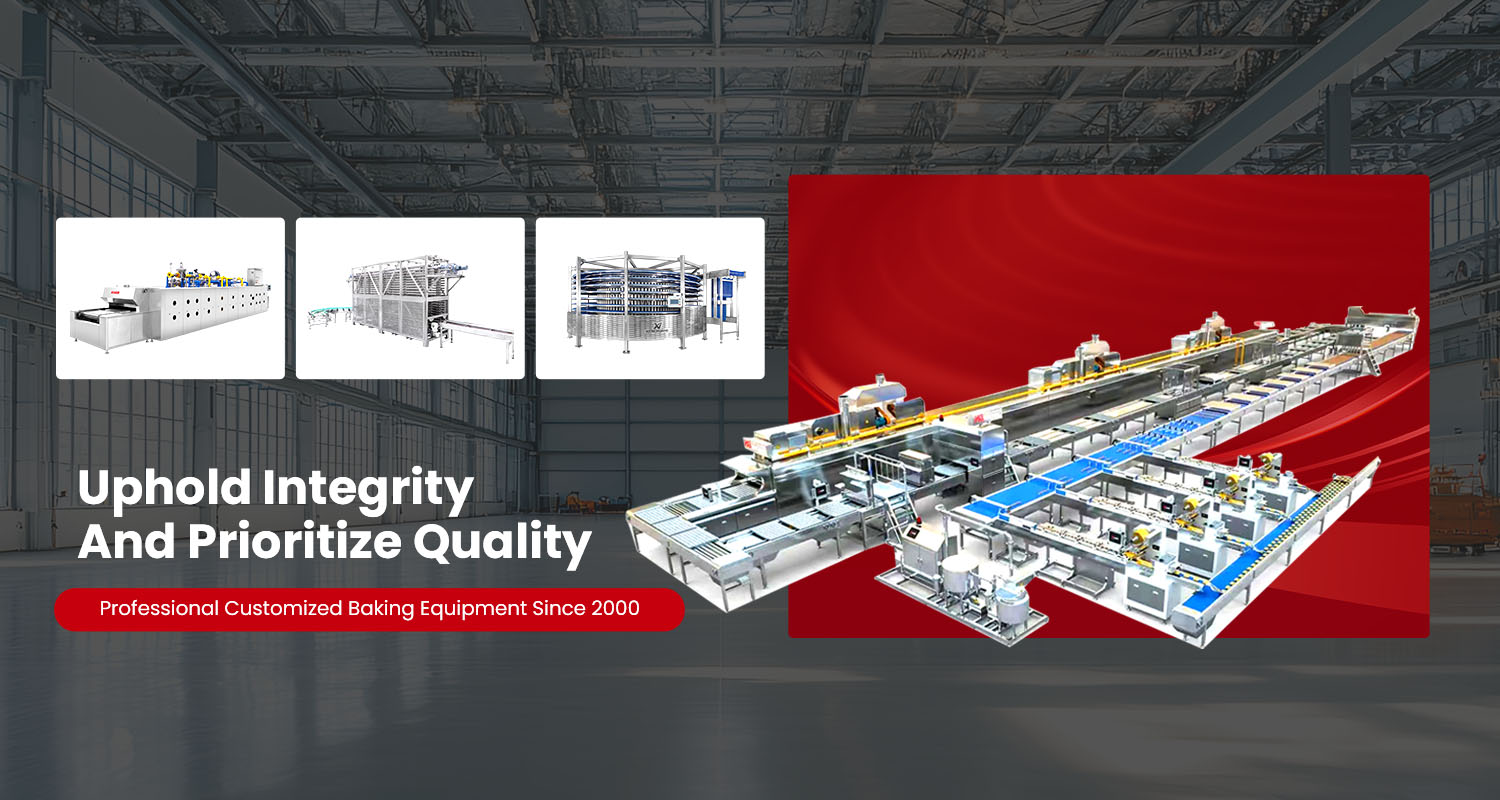
Conveyor Tunnel Oven
A conveyor tunnel oven is a continuous baking machine that moves food products through a heated chamber using a motor-driven conveyor belt. It combines controlled transportation, temperature regulation, and heat circulation to bake products such as bread, biscuits, cookies, cakes, and other bakery items.
Unlike traditional ovens that require products to be loaded and removed in separate batches, a conveyor tunnel oven allows food to pass through different heating zones at a controlled speed. The conveyor structure, heating method, and temperature settings work together to determine baking time, crust colour, moisture content, and final texture.
What Is a Conveyor Tunnel Oven?
A conveyor tunnel oven is an industrial baking system consisting of an enclosed heating chamber and a continuous transportation mechanism. Products enter through one end, travel along the conveyor, and leave from the opposite end after completing the baking process.
The conveyor can be designed with different materials and structures depending on the food being processed. Common options include wire mesh belts, solid metal belts, and specialized baking surfaces.
Inside the chamber, heating elements or burners generate the required temperature. Fans and ventilation ducts distribute hot air, while temperature sensors monitor different sections of the oven.
This arrangement allows products to move continuously without repeated manual loading and unloading.
How Does a Conveyor Tunnel Oven Work?
The baking process involves several coordinated operations.
1. Product Loading
Prepared dough, biscuits, or other bakery products are placed onto the conveyor at the entrance of the oven.
Depending on the product, items may be transported directly on the belt or placed on baking trays before entering the chamber.
Product spacing is important because overcrowding can restrict airflow and create uneven baking conditions.
2. Continuous Transportation
A motor and transmission system drive the conveyor through the heated chamber.
The belt moves at a controlled speed, determining how long products remain inside the oven. Slower movement increases baking time, while faster movement reduces exposure to heat.
3. Heat Transfer
As products travel through the tunnel, heat reaches them through three main methods:
Radiation: Heat transfers from hot surfaces and heating elements to the products.
Convection: Circulating hot air transfers heat across product surfaces.
Conduction: Heat moves through direct contact between the product and a heated belt or baking tray.
The combination of these methods depends on the oven design and the type of food being processed.
4. Temperature-Zone Control
Many conveyor tunnel ovens are divided into several heating zones.
Each section can operate at a different temperature to support specific baking stages. For example, the initial zone may encourage dough expansion, while later zones help develop crust colour and complete internal baking.
5. Product Discharge
After travelling through the entire heating chamber, baked products leave the oven and move to cooling conveyors or other processing equipment.
The products then cool gradually before slicing, decoration, inspection, or packaging.
What Are the Main Components of a Conveyor Tunnel Oven?
A conveyor tunnel oven contains several components that work together to maintain stable baking conditions.
Conveyor Belt: Moves products through the heating chamber. Its material, width, and structure should match the product dimensions and baking requirements.
Heating Chamber: Provides an enclosed space where products receive controlled heat throughout the baking process.
Heating System: Uses gas burners or electric heating elements to generate thermal energy.
Drive System: Includes motors, gears, and transmission components that control conveyor movement.
Temperature Sensors: Monitor heat conditions in different sections of the oven and provide feedback for temperature regulation.
Air Circulation Fans: Distribute hot air throughout the chamber to improve heat transfer and reduce temperature differences.
Exhaust System: Removes excess moisture and gases from the baking environment.
Control Panel: Allows operators to adjust conveyor speed, heating temperatures, and other operating parameters.
What Types of Conveyor Belts Are Used in Tunnel Ovens?
The conveyor belt directly affects how products are transported and heated.
Wire Mesh Conveyor Belts
Wire mesh belts consist of interconnected metal wires that form an open conveying surface.
Their structure allows hot air to circulate around products and can provide direct heat transfer from the belt surface.
They are commonly used for biscuits, crackers, and other products that benefit from airflow beneath the food.
Solid Metal Conveyor Belts
Solid metal belts provide a continuous flat surface for product transportation.
They are suitable for certain bakery products that require stable support or more consistent contact with the conveying surface.
Their heat transfer characteristics differ from open mesh belts, so baking conditions may need adjustment.
Baking Tray Conveyors
Some conveyor tunnel ovens transport products on baking trays rather than directly on a belt.
This arrangement is useful for products that need additional support during transportation, particularly delicate dough or items with specific shaping requirements.
What Products Can Be Baked in a Conveyor Tunnel Oven?
Conveyor tunnel ovens are used for various bakery products, although each requires suitable heating conditions.
| Bakery Product | Main Baking Considerations |
|---|---|
| Bread | Internal baking, crust formation, moisture control |
| Biscuits | Uniform colour, crispness, moisture removal |
| Cookies | Dough spread, surface browning, texture |
| Crackers | Even heating and low final moisture |
| Cakes | Controlled heat penetration and internal structure |
| Croissants | Layer separation, expansion, and crust development |
| Mooncakes | Surface colour, filling temperature, and internal baking |
| Pizza Bases | Bottom crust development and moisture reduction |
Product thickness, ingredient composition, moisture content, and conveyor speed all influence the required baking conditions.
What Are the Advantages of a Conveyor Tunnel Oven?
Continuous Baking: Products move through the oven without repeated loading and unloading, supporting a steady production process.
Adjustable Baking Time: Conveyor speed can be adjusted to control the duration of heat exposure.
Multiple Temperature Zones: Different sections can operate under separate temperature settings to support various baking stages.
Consistent Product Movement: The conveyor provides a defined transportation path and helps maintain regular product spacing.
Flexible Production Applications: Different belt structures and heating arrangements allow the oven to process various bakery products.
Reduced Manual Handling: Automated transportation reduces the need for workers to move products between separate baking stages.
Conveyor Tunnel Oven vs. Rotary Rack Oven: What Is the Difference?
Both ovens are used in commercial baking, but they operate differently.
| Comparison | Conveyor Tunnel Oven | Rotary Rack Oven |
|---|---|---|
| Operating method | Continuous | Batch-based |
| Product movement | Moving conveyor | Rotating rack |
| Baking capacity | Continuous product flow | Products baked in separate batches |
| Baking time | Controlled by belt speed | Controlled by baking cycle |
| Temperature control | May use multiple heating zones | Usually controlled within one chamber |
| Typical applications | Biscuits, bread, crackers | Bread, cakes, pastries |
A conveyor tunnel oven is generally suitable for products that follow repeated baking processes. A rotary rack oven provides more flexibility when different recipes and product quantities need to be handled separately.
How to Choose a Suitable Conveyor Tunnel Oven?
Identify the Product Type
Determine whether the oven will process bread, biscuits, cookies, cakes, or other baked products. Each product has different requirements for heat penetration, surface browning, and moisture removal.
Select the Conveyor Structure
Consider whether a mesh belt, solid belt, or tray-based system is more appropriate. Product size, weight, shape, and baking surface requirements should guide the selection.
Evaluate Heating Methods
Gas-fired and electric ovens have different installation and operating characteristics. The choice should consider available energy sources and the required temperature range.
Check Temperature-Zone Configuration
Different baking stages may require different temperatures. A multi-zone arrangement provides greater control over the heating profile throughout the chamber.
Consider Conveyor Speed
The conveyor must move at a speed that provides sufficient baking time. Its adjustment range should match the expected product dimensions and baking requirements.
Review Cleaning and Maintenance
Food particles and crumbs may accumulate on the belt and inside the oven. Accessible conveyor components, ventilation ducts, and inspection areas make regular maintenance easier.
What Are Common Problems with Conveyor Tunnel Ovens?
Uneven Baking: Poor airflow distribution, incorrect temperature settings, or inconsistent product spacing may cause uneven colour and texture.
Conveyor Belt Deviation: Incorrect belt tension, misaligned rollers, or worn mechanical components can cause the belt to move away from its intended path.
Underbaked Products: Excessive conveyor speed or insufficient heating may prevent the centre of thicker products from reaching the required temperature.
Overbaking: Excessive temperature or slow conveyor movement may cause products to become too dark or dry.
Temperature Fluctuations: Faulty sensors, heating components, or control systems may affect the stability of the baking chamber.
Regular inspection, cleaning, and appropriate operating adjustments help maintain stable performance. Maintenance should follow the manufacturer's instructions, with the equipment isolated and cooled before internal servicing.
Frequently Asked Questions
Is a Conveyor Tunnel Oven Suitable for Bread Baking?
Yes. It can bake different bread products by adjusting conveyor speed, temperature zones, and heating conditions according to loaf size and dough characteristics.
Why Does a Tunnel Oven Use a Moving Conveyor?
The conveyor transports products through the heating chamber at a controlled speed. This determines baking duration and supports continuous product movement.
Can a Conveyor Tunnel Oven Bake Biscuits and Cookies?
Yes. These products are commonly processed in conveyor tunnel ovens. Mesh belts and controlled heating zones can help achieve the required surface colour and moisture level.
What Determines the Baking Time in a Conveyor Tunnel Oven?
Baking time mainly depends on oven length and conveyor speed. Product thickness, moisture content, and heating temperature also influence the required duration.
Does a Conveyor Tunnel Oven Use Gas or Electricity?
It can use either energy source. Gas-fired systems rely on burners, while electric models use heating elements to generate heat.
Why Are Multiple Heating Zones Important?
Different stages of baking require different thermal conditions. Multiple zones allow operators to adjust temperatures throughout the oven and better control product expansion, internal baking, and surface browning.
A conveyor tunnel oven combines continuous transportation with controlled heating to support modern bakery production. Its conveyor design, temperature distribution, airflow, and operating speed all influence the final product. Understanding these factors helps explain how this equipment is used to bake bread, biscuits, cakes, croissants, and other bakery products consistently.
Previous: Biscuit & Cookie Production Line