





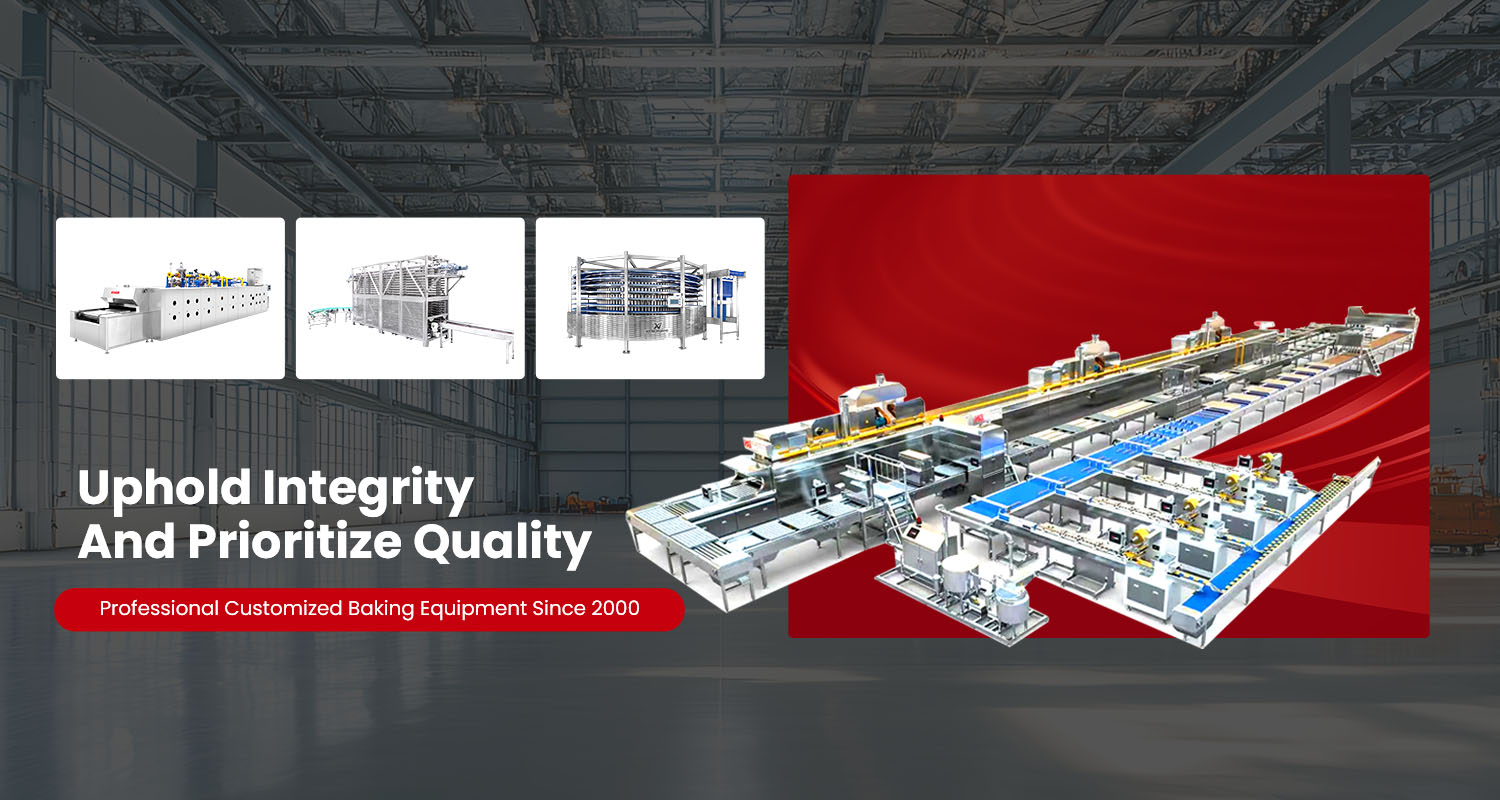
How to Ensure Consistent Dough Feeding?
Stable dough feeding begins before the dough reaches the next processing stage. For bakery production, uneven feeding can cause weight variation, unstable forming, poor texture, and unnecessary downtime. KC-SMART focuses on controlled material handling, accurate dosing, and smooth transfer so each batch can move through production with better rhythm and repeatability.
Why Dough Feeding Consistency Matters
Dough is sensitive to moisture, mixing time, flour absorption, temperature, and resting time. Industry baking references commonly note that flour moisture often ranges around 12% to 14%, while even small formula changes can affect dough viscosity and flow behavior. When feeding is unstable, the downstream machine may receive too much dough at one moment and too little at the next.
This creates several production risks:
Product weight becomes harder to control
Forming machines may run with uneven pressure
Operators need more manual adjustment
Waste increases during start-up and line changeover
Finished product shape may become inconsistent
For continuous production, the goal is not only to move dough forward. The real goal is to keep the dough condition, feeding speed, and material volume stable throughout the line.
Start With Accurate Ingredient Dosing
Consistent dough feeding depends heavily on what happens before mixing. When flour, water, yeast, sugar, oil, or other ingredients vary from batch to batch, the dough will not behave the same during transfer.
A well-designed flour dosing system helps reduce manual weighing errors and improves formula repeatability. For high-volume production, flour should be delivered with controlled speed, stable weighing feedback, and dust-reduction design. This improves cleanliness while helping operators maintain better batch control.
Key Factors That Affect Dough Feeding
| Factor | Production Impact | Recommended Control |
|---|---|---|
| Flour weight accuracy | Affects dough softness and batch stability | Use automatic weighing and recipe records |
| Dough resting time | Affects elasticity and flow | Match feeding speed with process rhythm |
| Conveyor speed | Affects downstream machine loading | Use adjustable speed control |
| Hopper level | Affects forming pressure | Keep dough level stable |
| Dough temperature | Affects viscosity and handling | Monitor mixing and room conditions |
Use Automation To Reduce Manual Variation
Manual feeding often depends on operator experience. Skilled workers can make adjustments quickly, but manual operation still brings variation between shifts. An automated ingredient feeding process can reduce this problem by using preset recipes, controlled weighing, and repeatable transfer steps.
For manufacturers, automation is especially useful when one production line needs to handle different dough types. Soft dough, hard dough, fermented dough, and high-oil dough may require different feeding methods. Equipment should allow flexible speed adjustment instead of forcing every formula into the same feeding rhythm.
Keep Dough Transfer Smooth
A dough feeding system should avoid sudden squeezing, tearing, or heavy impact. Dough structure can be damaged when transfer is too aggressive, especially after mixing or resting. Smooth conveying helps maintain dough texture and makes the next forming step more predictable.
KC-SMART designs feeding solutions around production flow, including dough storage, lifting, conveying, and controlled discharge. The equipment layout should match the mixer position, hopper height, production capacity, and cleaning requirements.
How To Control Dough Feeding Consistency
To control dough feeding consistency, the production line should combine mechanical stability with process data. Stable feeding is not achieved by one machine alone. It comes from matching the mixer, silo, dosing unit, conveyor, hopper, and forming equipment into one coordinated workflow.
Practical control points include:
Set clear recipe standards for each dough type
Record flour weight, water ratio, mixing time, and feeding speed
Keep hopper material level within a stable range
Avoid long dough waiting time before feeding
Clean contact parts regularly to prevent build-up
Train operators to check abnormal dough behavior early
Improve Flour Dosing Accuracy Before Scaling Production
When production volume increases, small dosing errors become larger cost problems. If a line produces many batches per day, even a small flour deviation per batch can affect total raw material usage, product weight, and final yield.
To optimize flour dosing accuracy, manufacturers should check weighing sensors, feeding valves, screw conveyors, air pressure, and recipe settings regularly. Calibration should not be treated as a one-time installation step. It should become part of routine production management.
Conclusion
Consistent dough feeding depends on accurate dosing, stable transfer, proper equipment matching, and clear production control. KC-SMART supports bakery production with practical feeding and dosing solutions that help manufacturers reduce manual variation, improve process rhythm, and maintain more reliable output across different dough applications.