





Flour bridging occurs when material forms a stable arch above the silo outlet and prevents normal discharge. Although the storage vessel may still contain a large volume of flour, little or no material reaches the conveying system.
-
2026-08-26
-
2026-08-26Spiral cooling can significantly reduce the floor area required between baking and packaging because a long conveyor path is arranged vertically instead of extending across the workshop. A correctly designed spiral conveyor cooling tower provides extended residence time within a compact footprint while maintaining continuous product movement.
-
2026-08-26An accurate quotation begins with more than a product name and a requested output. An industrial bakery production line combines ingredient handling, mixing, forming, proofing, baking, depanning, cooling, sorting, and packaging connections.
-
2026-08-26Bread that reaches the packaging station while still warm can create condensation, soften the crust, shorten shelf life, and increase the risk of microbial growth. The problem usually indicates insufficient bread cooling time, but extending the conveyor alone may not solve it.
-
2026-07-31Selecting an industrial baking system requires matching thermal performance and production flow to the product. Oven type, heating method, belt width, baking time, airflow, exhaust, energy source, and automation must be evaluated together. The best system is the one that repeatedly produces the required quality at a sustainable operating cost.
-
2026-07-31An industrial dough processing system is a coordinated group of machines that stores ingredients, measures recipes, mixes dough, transfers batches, and prepares dough for dividing or forming. Its purpose is to maintain consistent dough quality while reducing manual handling, ingredient variation, contamination risk, and production delays.
-
2026-07-31Bakery line efficiency improves when every process produces the required quantity at the correct time and quality. The objective is not simply to run machines faster, but to increase accepted output while controlling downtime, waste, energy use, changeovers, and labor.
-
2026-07-31A bakery equipment supplier converts a production objective into machinery that can operate reliably under real factory conditions. The work extends beyond supplying ovens or conveyors. It includes evaluating recipes, calculating capacity, designing layouts, coordinating machine interfaces, supporting installation, and helping the finished line achieve its agreed performance.
-
2026-07-31Improving bakery line efficiency requires balanced capacity, stable process parameters, shorter interruptions, and better coordination between people and equipment. Increasing the speed of one machine rarely improves total output.
-
2026-07-31A bakery equipment supplier does more than manufacture and deliver individual machines. The supplier translates product recipes, output targets, factory conditions, and automation requirements into a workable production system. Its role can cover process analysis, equipment selection, layout planning, manufacturing, installation, commissioning, training, and long-term technical support.
-
2026-07-31Choosing a food processing line begins with understanding what must happen to the product at every stage. Capacity is important, but processing time, temperature, hygiene, product handling, changeovers, utilities, packaging, and factory space ultimately determine whether the line can operate reliably in daily production.
-
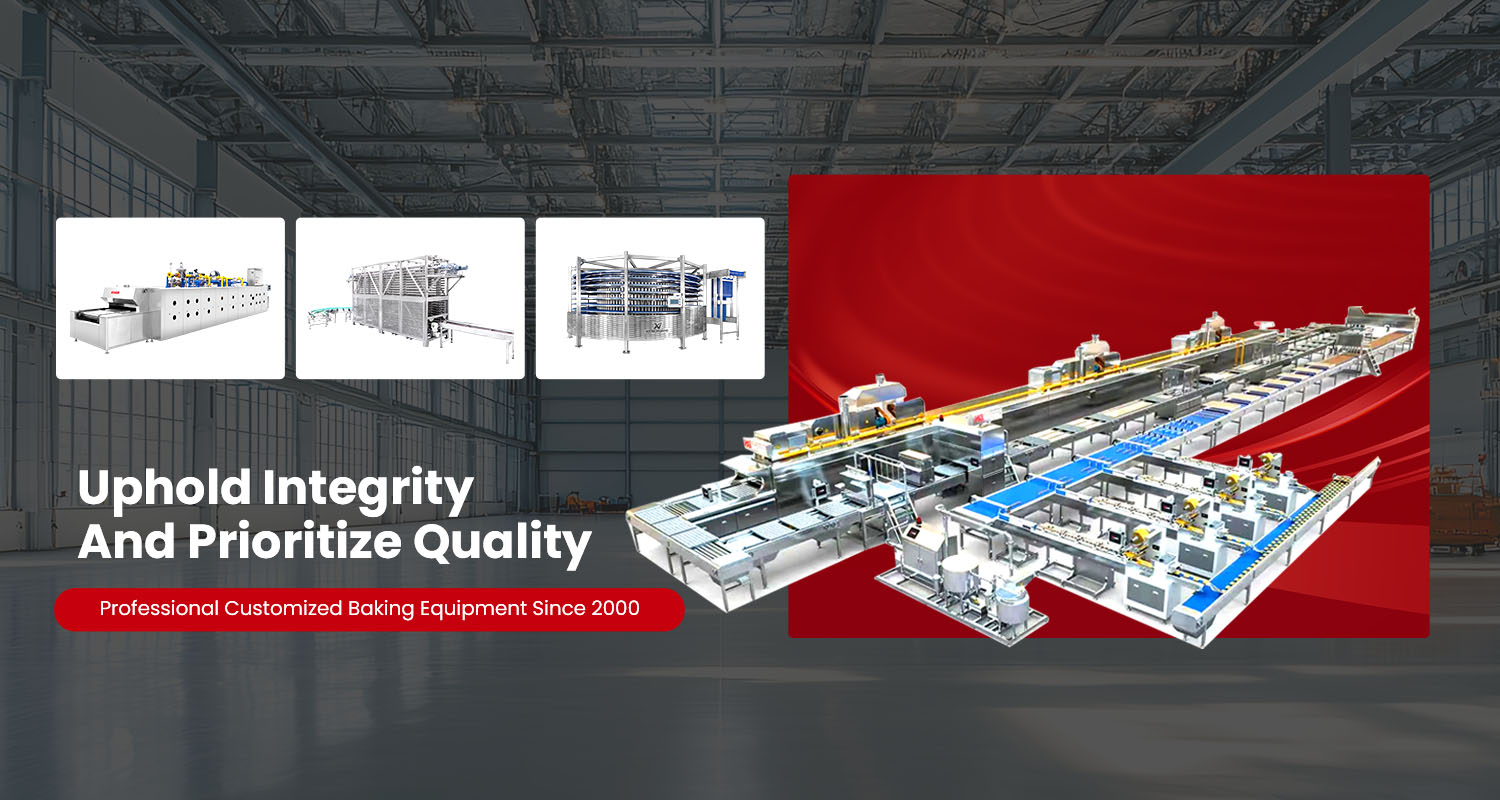
2026-07-31An integrated bakery system connects ingredient handling, dough processing, fermentation, baking, cooling, depanning, sorting, and packaging into one coordinated production flow. Instead of operating each machine separately, the system synchronizes capacities, conveyor speeds, controls, and product transfers to improve consistency and reduce unnecessary manual handling.